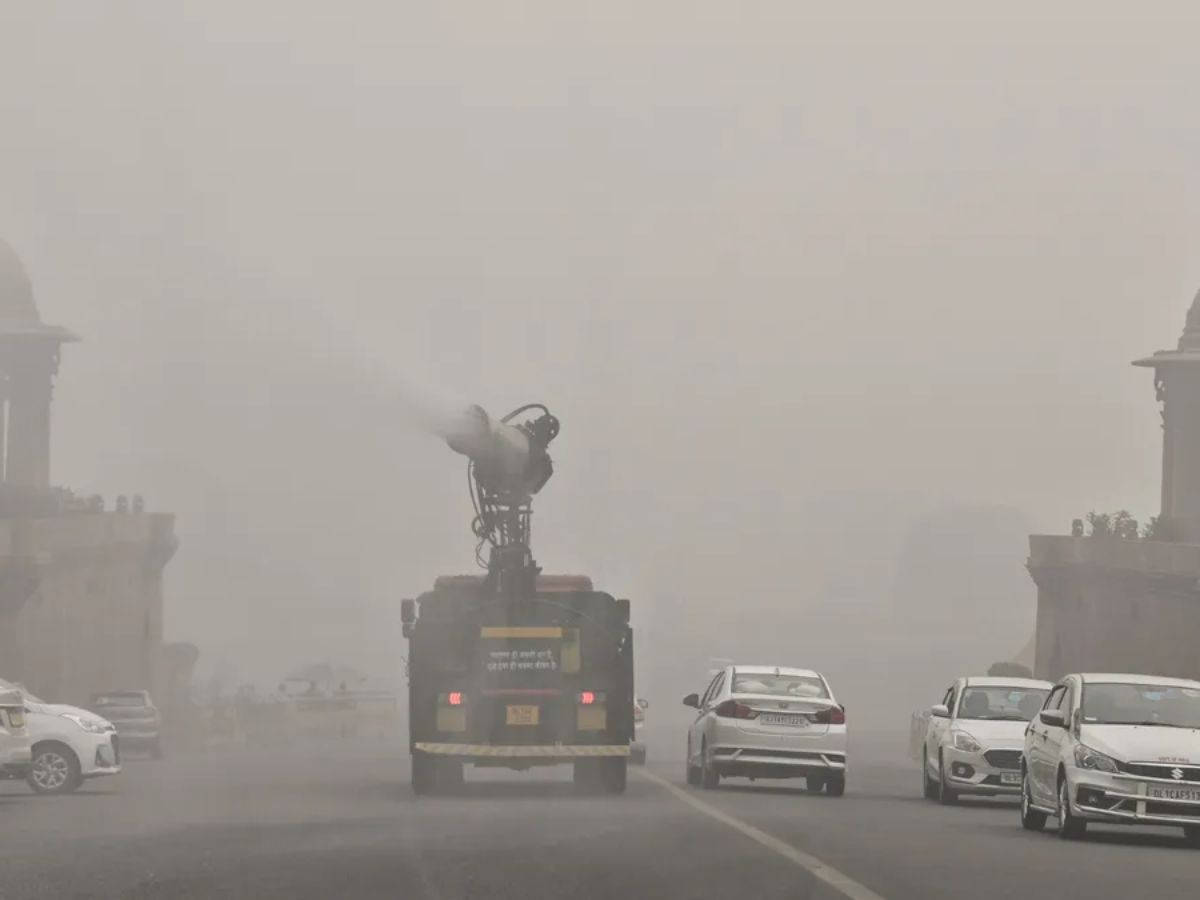
Delhi Cloud Seeding Process Concludes. (Representative Image: Twitter)
Delhi is going to witness artificial rain in the next couple of hours. Delhi’s cloud seeding process is led by the Indian Institute of Technology (IIT) Kanpur in coordination with the India Meteorological Department, which involves specially equipped aircraft dispersing silver-iodide and salt particles into moisture-laden clouds above northwest and outer Delhi.
Delhi’s cloud seeding process to tackle air pollution has concluded for now. Delhi Environment Minister Manjinder Singh Sirsa stated that “Cloud seeding occurred in Khekra, Burari, Mayur Vihar, and several other areas. Eight flares were used, and the entire process lasted about half an hour. The second and third trials will also take place today.”
According to reports, the cloud seeding process was done in the Burari, Mayur Vihar, and Karol Bagh areas of Delhi. Reportedly, officials will conduct another round of sedding. The exercise was going to take place at 12:30, but was delayed due to low visibility.
Last week, the government conducted a cloud seeding trial over Burari in North Delhi, where small amounts of silver iodide and sodium chloride were released. However, it didn’t result in rain due to the mixture levels that were below 20 percent.
Speaking to ANI, Delhi Chief Minister Rekha Guota said, “Cloud wedding is a necessity for Delhi and is the first experiment of its kind. We want to try it in Delhi to see if it can help us control this very serious environmental problem.”
She further said, “So the blessings of the people of Delhi are with the government, and we feel that this will be a successful experiment and in the future, we will be able to overcome these environmental problems.”
Cloud seeding is a man-made process, also known as artificial rain, that stimulates existing clouds to produce rain or snow. In this technique, certain chemical agents such as silver iodide, potassium iodide, or dry ice are dispersed into the clouds to enhance condensation and trigger precipitation.
On Tuesday morning, Delhities woke up to cloudy skies and thick haze, with the city’s Air Quality Index (AQI) hovering at 305, placing it in the ‘very poor’ category. According to Central Pollution Control Board (CPCB) data, 27 out of the city’s 38 monitoring stations reflected similarly hazardous levels.
Artificial rain could help the city of Delhi in washing out airborne pollutants, which can bring short-term relief, especially when natural rainfall is lacking and smog levels are high.
Poland urges internet firms to act on violent content after school stabbings
WARSAW, Oct 16 (Reuters) - Poland summoned internet companies including Google and Meta to the…
Wall Street futures subdued as tech wobbles again; Tesla gains
By Tharuniyaa Lakshmi and Purvi Agarwal Oct 16 (Reuters) - US stock index futures were…
Indore [Madhya Pradesh, India], october 16: When several children in the same classroom struggle to…