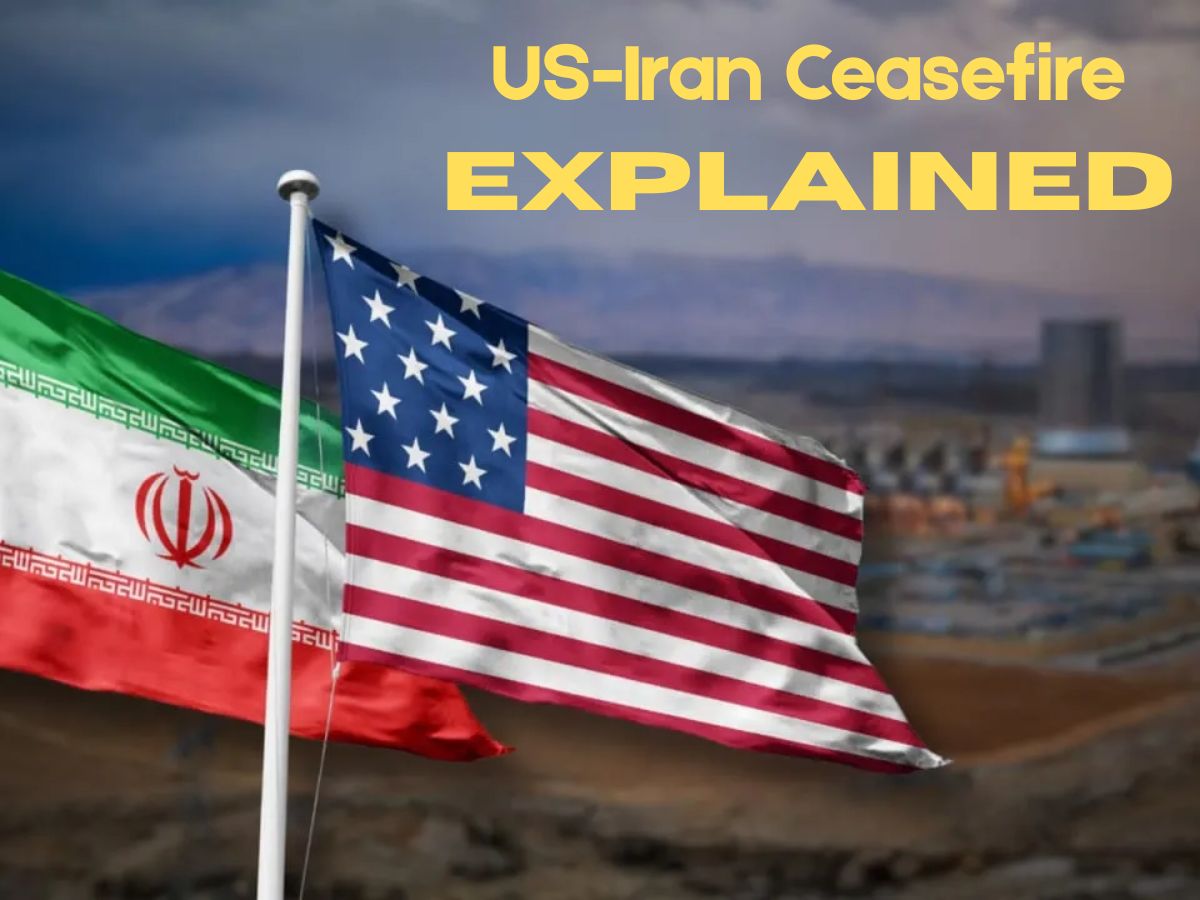
US-Iran ceasefire explained with timeline, key terms, Strait of Hormuz status, Israel-Lebanon angle [Photo: AI]
A tense standoff between the United States and Iran has eased after both sides agreed to a temporary ceasefire, reducing fears of a wider Middle East war. The conflict had raised alarm globally due to its potential to disrupt oil supplies and key shipping routes.
The pause in hostilities comes after days of rapid escalation, involving strikes, counter-strikes, and heightened military alerts. While the ceasefire offers short-term relief, it does not resolve the deeper geopolitical tensions driving the conflict.
Global markets, especially oil, have responded cautiously, reflecting uncertainty about how long the calm will last. The situation remains fluid, with multiple regional actors closely watching developments.
The latest phase of the US-Israel-Iran conflict began on 28 February 2026, when the United States and Israel launched coordinated airstrikes on targets inside Iran.
These strikes marked a major escalation, as they directly targeted Iranian military and strategic sites, triggering immediate retaliation from Tehran. Iran responded with missile and drone attacks on US bases and Israeli-linked targets across the region.
Following the February 28 strikes, the situation rapidly deteriorated into a wider regional confrontation, with multiple countries placed on high alert. The Strait of Hormuz was also impacted, raising global concerns over oil supply disruption.
Tensions had already been building since early February 2026, when diplomatic talks failed, and both sides increased military presence in the region.
Finally, after days of high-risk escalation, the US and Iran agreed to a temporary ceasefire.
The US-Iran ceasefire deal is a temporary two-week truce announced on April 7, 2026, aimed at stopping immediate military escalation between the two sides. It came just hours before a major US strike, making it a last-minute diplomatic breakthrough.
Under the agreement, both countries have paused all offensive military operations, including airstrikes and missile attacks, to prevent further escalation. The deal does not end the conflict but creates a cooling-off period.
A key condition of the ceasefire is Iran’s commitment to reopen and secure the Strait of Hormuz, a critical global oil route. This move aims to restore confidence in international shipping and energy supply chains.
The agreement was brokered through mediation led by Pakistan, with support from other regional players, using backchannel diplomacy to bring both sides to the table. Importantly, the ceasefire is conditional and fragile, meaning it depends on both sides following the agreed terms. Any violation could lead to a rapid return to hostilities.
US must guarantee no future military aggression against Iran: The US should promise it will not attack Iran again in the future. This is to build trust and prevent another war.
The ceasefire has paused active hostilities, but it has not ended the conflict. Core issues between the US and Iran remain unresolved. These include disagreements over military presence, sanctions, and regional influence. Such factors continue to fuel underlying tensions.
Experts warn that without a long-term agreement, the situation could quickly deteriorate. The current calm should therefore be seen as fragile and reversible.
The ceasefire terms between the United States and Iran focus on an immediate halt to all offensive military actions, including airstrikes, missile launches, and drone attacks. Both sides agreed to pause the confrontation to prevent further escalation in the region.
A key condition is mutual restraint, meaning neither country will initiate new attacks or support proxy groups in carrying out strikes during the ceasefire period. This is aimed at reducing indirect conflict across the Middle East.
The agreement also includes a commitment to keep the Strait of Hormuz open and secure, ensuring the safe passage of commercial shipping and uninterrupted global oil supply. This point is crucial for stabilising energy markets.
Another important term is the use of backchannel communication and intermediaries to quickly address any violations or misunderstandings. This reduces the risk of accidental escalation.
The ceasefire is time-bound, reportedly lasting around two weeks, and is subject to extension depending on progress in diplomatic talks. It serves as a testing phase for both sides. Importantly, there is no formal enforcement mechanism, making the agreement dependent on trust and international diplomatic pressure.
Israel is not formally included in the ceasefire agreement, which raises important concerns about how stable the arrangement will remain in the coming days. Its independent military actions could still influence the overall situation in the region.
Any escalation involving Israel has the potential to disrupt the fragile calm between the US and Iran, especially if it targets Iran-backed groups or strategic locations. This creates a constant risk of the conflict reigniting.
The situation becomes more complex due to Lebanon’s involvement, particularly with Hezbollah, which is backed by Iran. Any cross-border escalation between Israel and Lebanon could indirectly pull Iran back into confrontation.
Pakistan has played a supportive diplomatic role by advocating restraint and dialogue. Its involvement reflects broader regional concerns about stability. While not directly part of negotiations, Pakistan has encouraged peaceful resolution.
Its position aligns with efforts to prevent escalation across the region. Such diplomatic support contributes to maintaining the ceasefire environment.
The Strait of Hormuz remains open and operational following the April 7, 2026 ceasefire, easing immediate fears of a major disruption to global oil supply. This narrow waterway handles a significant share of the world’s crude exports, making its status critical for global markets.
During the peak of the conflict, Iran had threatened to restrict or control movement through the strait, raising alarm among major oil-importing nations. However, as part of the de-escalation, Tehran signaled that it would allow safe passage of commercial vessels.
Naval forces from the United States and allied countries continue to maintain a heightened security presence in and around the strait to ensure shipping lanes remain protected. Surveillance and patrol operations have also increased.
Oil prices reacted sharply during the escalation, reflecting fears of supply disruption. Prices surged as tensions increased. Following the ceasefire, markets have shown signs of stabilisation. However, volatility persists due to uncertainty.
Any renewed conflict could again push prices higher. Energy markets remain closely tied to developments in the region.
The conflict has had a significant impact on global shipping routes. Increased risks have led to higher insurance costs for vessels. Shipping companies have adopted cautious strategies, including route adjustments.
The ceasefire has eased some concerns, but risks remain elevated. Trade flows continue to depend on stability in key maritime corridors.
India, as a major importer of oil, is directly affected by developments in the Middle East. Stability in the region helps maintain a steady supply. Any disruption in the Strait of Hormuz could impact fuel prices and trade.
The ceasefire offers short-term relief for energy markets in India. However, long-term stability remains crucial for economic planning.
The ceasefire has opened a window for broader peace discussions between the US and Iran. These talks aim to address long-standing issues. Success will depend on trust, compromise, and sustained diplomatic effort.
Regional and global stakeholders are closely watching the process. The outcome could shape the future of Middle East stability.
CORRECTED-RPT-ANALYSIS-Market selloff, rising rates test AI data centre deal boom
(Corrected AirTrunk's Johor valuation to $2 billion from $1 billion in paragraph 26, and separated…
Germany to unveil Nvidia AI agreement next week, government sources say
BERLIN, Oct 16 (Reuters) - Germany is set to announce a cooperation agreement with US…
Factbox-Weight-loss drug developers line up to tap lucrative market as competition heats up
Oct 16 (Reuters) - The weight-loss drug market is booming, with biotech firms racing to…